 |
|
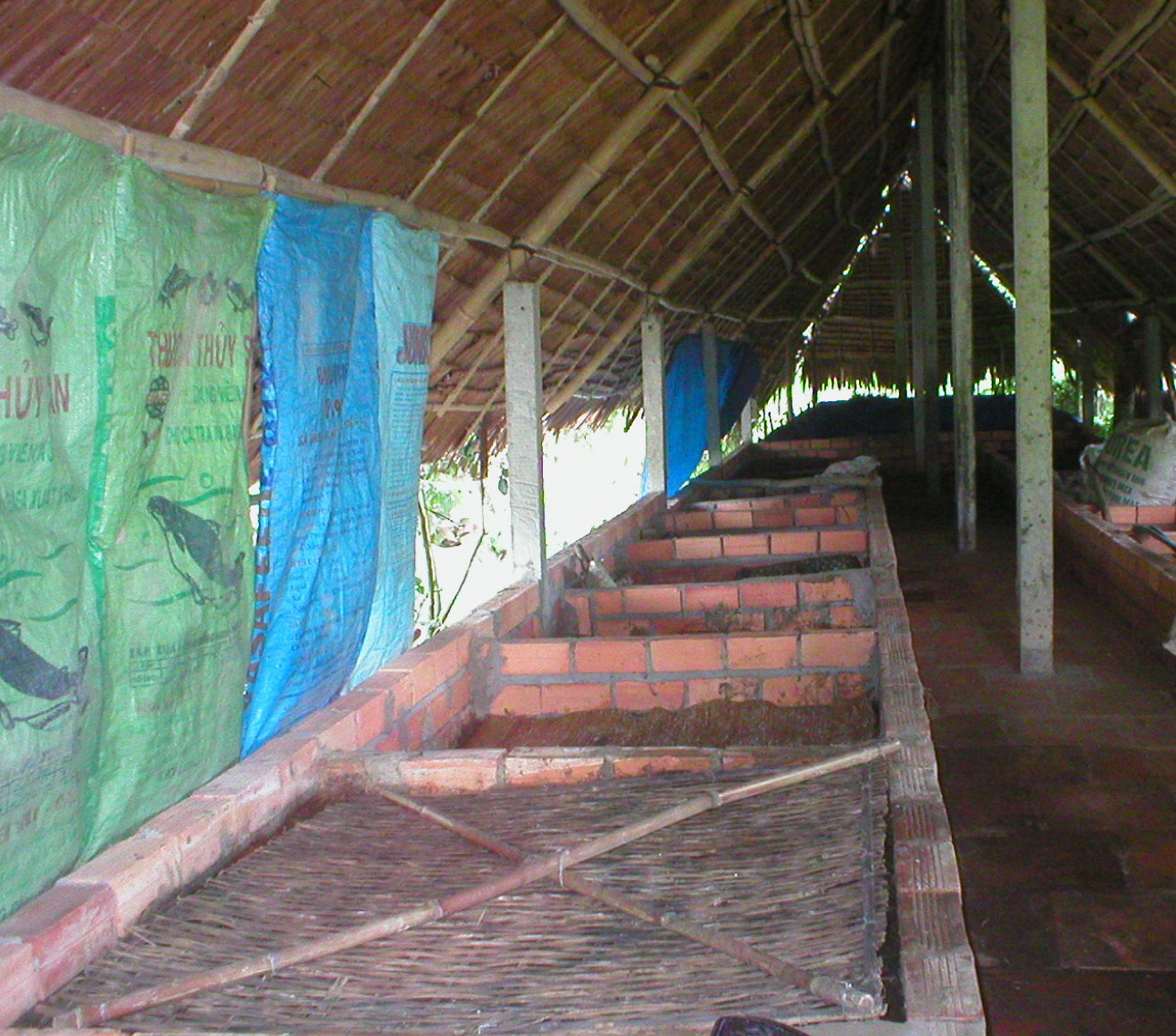
Photo 1. The house used to raise the eartworms |
|
MEKARN Regional Conference 2007: Matching Livestock Systems with Available Resources |
A series of trials were conducted in 2006 and 2007 on a smallholder farm in Omon district in Cantho City in the Mekong Delta of Vietnam to evaluate the use of animal wastes for the production of earthworms (Perionyx excavatus) and the effect of using these as protein supplements in diets of growing crossbred ducks and freshwater turtles (Trionyx sinensis), and using the vermicompost for cultivating water spinach (Ipomoea aquatica).
The experiment on producing earth worms included four treatments with four replicates. The worms were supplied with different wastes: (1) fresh cattle manure (FCM); (2) a mixture of cattle manure and composted cattle manure (MCM), (3) composted cattle manure (CCM), and (4) a mixture of fresh water hyacinth and pig manure after being kept together for one week (HPM). These wastes were offered to the worms once every five days. The biomass gains of the fresh worms after 60 days were: 962, 12, 476 and 1772 g per square meter, and the waste conversion ratios (kg DM/kg fresh worms) were: 14, 2630, 58 and 8 for FCM, MCM, CCM and HPM, respectively. In the second experiment ducks from 14 to 60 days of age were fed the worms as part or complete replacement for a protein supplement in the diet. There were three treatments with four replicates and four ducklings per group: (1) ducklings confined and fed a commercial mash control diet (Ctr); (2) ducklings confined and fed a diet with 50% of the protein from soyabean replaced by that from the fresh worms (50R) and (3) ducklings confined and fed a diet where 100% of the protein of soyabean was replaced by the fresh worms (100R). Daily live weight gains were 45.8, 47.8 and 47.5 g and feed conversion ratios 3.3, 3.1 and 3.2 for the Ctr, 50R and 100R diets, respectively.
The trial on freshwater turtles that were fed the worms from 30 to 90 days old included three treatments with three replicates and two young turtles per group. The treatments were: turtles confined in buckets with swimming water and fed (1) commercial pellet control (CPC), (2) confined as (1) and fed fresh small minced fishes (FFM), and (3) confined as (1) and fed whole the live worms (WEW). The final live weights were 10.2, 11.5 and 13.1 g, and the gains were 3.2, 5.0 and 7.3 g for CPC, FFM and WEW, respectively.
Vermicompost that remained after harvesting the worms was used to plant water spinach (WS) with three treatments and three replicates. The treatments were: (1) the WS fertilized with 35 g/m2 of urea (CtrU), (2) the WS with 25 kg/m2 of vermicompost (VCP), and (3) the WS with (2) plus 20% urea of (1) (UCP). After 25 days, growth rates of the biomass of the WS were 0.33, 0.29 and 0.42 kg/m2, and after a 15 day growth, the biomass of the second cut was: 0.92, 0.86 and 1.10 kg/m2 for CtrU, VCP and UCP, respectively.
Use of animal wastes to produce earthworms and vermicompost to raise ducks, turtles and water spinach is a way to increase outputs of farm products and decrease the use of inorganic chemicals in integrated agriculture.
Key words: Ducklings, earthworms, freshwater turtles, growth, vermicompost, wastes, water spinach.
After the avian influenza epidemics, poultry production has been gradually recovering on smallholdings in the Mekong Delta of Vietnam. At present (end of 2007), commercial protein feeds for livestock production are sold at so high prices that the farmers find it difficult to get any economic benefits from poultry raising. Protein feeds produced in the Delta are limited and the natural sources of these are tending to become impoverished. Also, soya beans imported for livestock are so expensive that producers can not use them for feeding their animals, especially the smallholder producers. Animal manure and other organic wastes are considered as waste materials with very low value and are little used in the Delta. It is hypothesed that they could be used as the main substrate material to raise earthworms by suitable methods for producing fresh worms that are regarded as an ideal and inexpensive protein source for feeding directly to poultry or fish all the year round. Small preliminary trials with chicks fed fly larvae recently carried out (Men et al 2005) partly confirmed this. Studies from several countries (USA, Canada, China, Thailand, Cuba, India and Vietnam) on producing earthworms to feed poultry have shown interesting results.
In order to solve the problems above, there a series of trials were conducted in 2006 and 2007 on a smallholding in the Mekong Delta of Vietnam to evaluate the use of animal wastes for the production of earthworms (Red worm, Perionyx excavatus) and the effect of using these as protein supplements in diets of growing crossbred ducks and freshwater turtles (Trionyx sinensis), and vermicompost for planting water spinach (Impoea aquatica).
Use of animal wastes to produce earthworms and vermicompost to raise ducks, turtles and vegetables is a way to increase outputs of farm products and decrease the use of inorganic chemicals in agriculture and thus reduce pollution from animal production activities in the Delta.
Experimental design: The experiment was carried out on a smallholding in the agricultural suburban area of Cantho City in the Mekong Delta. The trial was a completely randomized design, with four treatments and four replicates. The treatments were:
Worms offered fresh cattle manure (FCM)
Worms offered a mixture of cattle manure and composted cattle manure (MCM)
Worms offered composted cattle manure (CCM)
Worms offered a mixture of fresh water hyacinth and pig manure (ratio 1:1) one week after mixing (HPM).
The wastes were prepared and supplied to the worms once every five days throughout the experiment. The worms were kept in brick-lined enclosures (1 m2 area; 30 cm deep) (Photo 1) in a house with a thatched roof that prevented direct sunlight reaching them. The temperature in the house averaged 26.9-27.80 C, and relative humidity averaged 72-82% before and after watering. A dense black nylon net covered the surfaces of the enclosures to reduce the light reaching the worms. The substrates were watered from a pond adjoining the canal with an amount of 2-5 liters daily to maintain the relative humidity in the house at 70-80%.
|
|
Photo 1. The house used to raise the eartworms |
Initially, the enclosures were filled with a ground basal mixture of decayed rice straw and vermicompost. Layers of the different wastes were put in the enclosures, alternating with the basal mixture, and then the worms were placed. Finally the black nets were placed over the worm enclosures. Observations were made daily to check the development of the worms. When vermicompost excreted from the worms and emerged on the surface new wastes were added, around five days. Parameters measured were biomass and growth index of the worms, waste conversion ratios, nutrient composition and carbon ratios of the wastes: % C = (100-% ash)/1.8 (Adam (1951), cited by Tran Thi Thuy Hang (2007)).
 |
 |
|
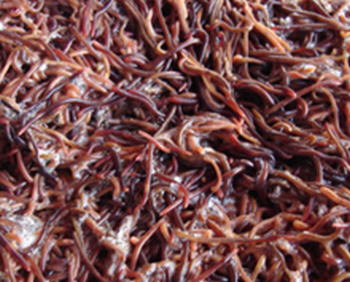
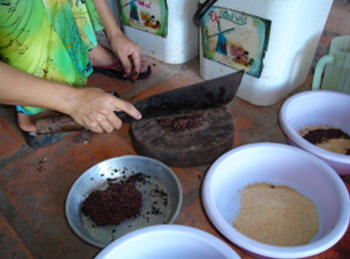
Photo 2a. Worms harvested for experimental ducks and turtles |
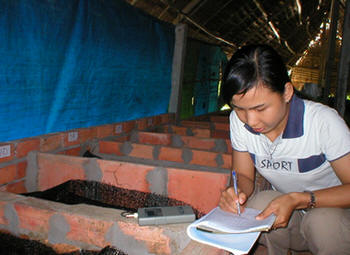
Photo 2b. Collection of worm data |
There were three treatments with four replicates and four ducklings per group. The treatments were:
Ducklings confined and fed a commercial mash control diet (Ctr)
Ducklings confined and fed a diet in which 50% of the protein of soyabean was replaced by that from the fresh worms (50R)
Ducklings confined and fed a diet in which 100% of the protein of soyabean was replaced by that from the fresh worms (100R).
These diets were supplied to the ducks ad libitum three times per day.
The ducks were housed in a shed divided into pens. The pens were mades from bamboo frames, with thatched roofs and brick floors coverd with rice straw or dried grass for bedding, and with an average density of one duck per 0.25 m2. The ducks also had access to outside covered sand yards with an area of 1 m2 per duck. The temperature in the house averaged 25.50C and relative humidity averaged 71.5% in the morning (8:00h), 28.80C, 73.2% at noon (12:00h), and 25.30C and 84.2% at night (22:00h). Natural light was used in the day time, with light from electric bulbs at night with an intensity of 3W/ m2 to maintain a total of 24 hours light each day.
 |
 |
|
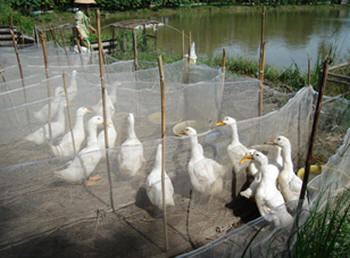
Photo 3. Experimental ducks |
Photo 4. Worms were minced and mixed with mash before being fed to the ducks |
Feeders used were round plastic basins 30 cm in diameter and 10 cm deep. Drinkers were round plastic containers linked to a plate so that water was filled automatically. In addition, a round plastic basin 60 cm in diameter was put in the end of each pen and filled intermittently with water to meet both the drinking and bathing requirements. Both feeders and bathing basins were cleaned daily in the morning.
During the brooding stage up to 14 days of age the ducklings were fed mash ad libitum and then fed the experimental grower diets. The feed was formulated and produced from feedstuffs purchased in a local feed shop, with the composition shown in Table 1.
Parameters measured included nutrient composition of the diets, growth rate of the ducks, feed conversion ratios, carcass traits, investment and net economic benefits from the ducks.
The trial included three treatments with three replicates and two young turtles per group. The treatments were:
Turtles confined with swimming water and fed commercial pellets, control (CPC)
Turtles confined as in (1) and fed fresh small minced fish (FFM)
Turtles confined as in (1) and fed whole live worms (WEW)
Two young freshwater turtles were kept in each bucket (25 x 25 x 40 cm height). The buckets were two third filled with fresh water together with some water hyacinth plants and some hollow bricks.
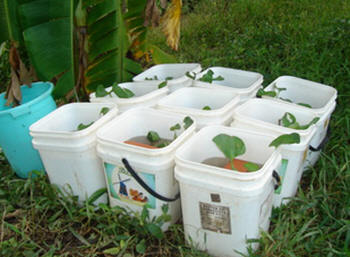 |
| Photo 5. Young turtles raised in buckets filled with water |
Comercial pellets, fresh small minced fish and live worms were supplied once daily to the turtles in CPC, FFM and WEW, respectively.
Parameters measured were live weights of the young turtles at 30 and 60 days and feed conversion ratios over the 60 day period of the experiment.
The trial consisted of three treatments with three replicates. Each replicate was water spinach (WS) planted on a square meter area. The treatments were:
1. WS fertilized with 35 g/m2 of urea (CtrU)
2. WS fertilized with 25 kg/m2 of vermicompost (VCP)
3. WS as (2) plus 20% urea as in (1) (UCP)
In treatments 2 and 3, 10 kg of the vermicompost was mixed with the soil one day before seeding the WS. The amount of WS seeds placed on the soil surface in all treatments was 10 g/m2. After seeding, the first fertilization was carried out when the plant had 4 true leaves, then once every 5 days, and fertilization stopped 10 days before havesting.
 |
|
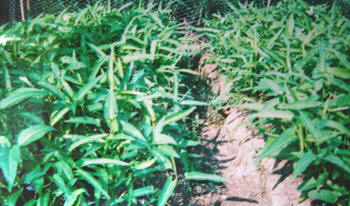
Photo 6. Growing water spinach |
Parameters measured were the heights of WS from the row surface to the highest leaf tops and total biomass (leaves and stems) of the WS after 25 days for the first harvest and 15 days after the first cut for the second harvest.
Samples of wastes, worms, vermicompost and feeds for ducks were analysed for dry matter, organic matter, nitrogen, crude fibre, ether extract, nitrogen free extract, ash and amino acids by standard AOAC methods (AOAC, 2000) at the laboratories of Cantho University.
The data were analyses by analysis of variance using ANOVA General Linear Model procedure of MINITAB version 13.2 program statistical software (2000).
Economic analyses were carried out using current prices in Vietnamese Dong (15,900 VND=1US$) to compare the feeding costs and feed cost per live weight gain among the different treatments.
The chemical composition (DM basis) of the wastes is shown in Table 1. The organic matter (OM) content of the fresh cattle manure was highest (77.9%) and the lowest OM was for the composted cattle manure (64.1%). However, the OM data of fresh cattle manure in the trial is lower than the data reported by Edwards et al. (1998), but is similar to the value of 78.5% reported by Thieu Hoang Duy (2004).
The total nitrogen concentration in the mixture of fresh pig manure and water hyacinth was highest, with the lowest value also for the composted cattle manure. The nitrogen concentration in the fresh cattle manure was rather low, only 1.37%, and the resulting a C/N ratio thus was rather high (31.7), which is higher than the value reported by Le Van Can (1982) of 20-25. Nguyen Duy Quynh Tram (2004) reported that the chemical composition of animal manures are very variable, and depend on factors such as the feed given, processing of the manures, and the time and conditions for storage.
Table 1. Chemical composition of wastes supplied to the worms (dry matter basis)
|
Treatment |
Moisture, % |
OM, % |
Nitrogen, % |
C/N ratio |
pH |
|
FCM |
80.7 |
77.9 |
1.37 |
31.7 |
7.91 |
|
MCM |
64.1 |
41.9 |
1.30 |
17.9 |
8.42 |
|
CCM |
68.2 |
52.8 |
1.43 |
20.5 |
8.20 |
|
HPM |
79.4 |
72.3 |
2.70 |
14.9 |
7.08 |
The data in Table 1 show that the OM, nitrogen and C/N ratio in the composted cattle manure is rather low, probably because the materials were composted for a long time (5 to 6 months) and as a result there would have been some decomposition by the microbes in the manures.
Worms can survive at pH from 4 to 9 ( Nguyen Thi Hue Thanh, 2002), but most earthworms reproduce and grow best at a pH of around 7. So, the treatment where the worms were offerred a mixture of hyacinth and pig manure (HPM) would have been the most suitable. Water hyacinth is readily available in the Mekong Delta, and is used for feeding ducks (Men et al 2005 and pigs (Nguyen Ba Trung, 2003), and was also used efficiently in this trial.
Earthworms can develop and reproduce temperatures of 25 – 300 C (Nguyen Van Bay, 2004), but the optimum is around 250 C (Edwards, 1998). During the 8 weeks of the experiment the temperatures fluctuated from 26.9 to 27.80 C, which were slightly higher than the optimum.
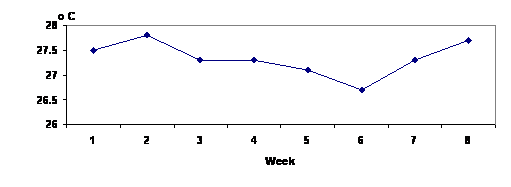
Figue 1.Temperature fluctuations in the worm compost
Worms (Perionyx excavatus) are rather sensitive to changes in the relative humidity (RH), which influences their development (Nguyen Van Bay, 2004). The optimum RH for worms is around 75.2 – 83.2% (Hallatt, 1992). Figure 2 shows the effects of treatnment and watering on RH.
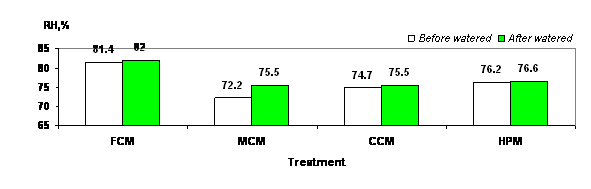
Figue 2. Relative humidities in the worm compost
Table 3 shows that the biomass and growth coefficients of the worms grown on the mixture of water hyacinth and fresh pig manure were highest, and values for the worms grown on the composted cattle manure were lowest. From the results obtained it seems that the worms grew best on HPM due to its higher content of nitrogen and organic matter, while composted cattle manure cannot be recommended. The waste conversion efficiency for the HFM treatment was the lowest, at around 8, while the highest efficiency was for the CCM treatment (2630).
Table 3. Performances of worms and waste conversion ratios at 60 days
|
Parameter |
Treatment |
SE |
P value |
|||
|
FCM |
MCM |
CCM |
HPM |
|||
|
Biomass, g |
962a* |
476ab |
12b |
1 77c |
94.0 |
0.001 |
|
Growth coefficient |
0.962a |
0.478ab |
0.012b |
1.77c |
0.19 |
0.001 |
|
DM wastes supplied, kg |
13.3a |
31.6b |
27.6c |
13.6a |
0.09 |
0.001 |
|
Waste conversion ratio |
14.0 |
2630 |
58.0 |
8.0 |
85.8 |
- |
* Means without common superscripts within rows are significantly different (P<0.001)
Data in Table 4 show the that OM content of FCM was highest, while the nitrogen content was highest in HPM.
Table 4. Chemical composition of vermicompost (dry matter basis)
|
Treatment |
Moisture, % |
OM, % |
Nitrogen, % |
C/N ratio |
pH |
|
FCM |
81.1 |
62.8 |
1.46 |
23.8 |
7.5 |
|
MCM |
68.7 |
44.4 |
1.43 |
17.3 |
7.6 |
|
CCM |
72.6 |
44.8 |
1.35 |
16.9 |
7.3 |
|
HPM |
74.7 |
53.4 |
1.92 |
15.4 |
7.3 |
Experiment 2: Evaluation of whole worms for feeding ducks
The chemical composition of the feed ingredients and diets is shown in Table 5. The fresh worms used as replacement for soyabean meal had an average DM content of 21.5%. The protein content (64.5% of DM) was higher than that found in an earlier study reported by Nguyen Duy Quynh Tram (2004). The chemical composition of the diets used in the experiment is shown in Table 6. The crude protein content in all diets was kept constant (16.0%). However, the amounts as fed in the 50R and 100R treatments were higher than of the control treatment because fresh worms replaced soyabean meal.
Table 5. Chemical composition of the feeds used, % of DM
|
Ingredient |
DM, % |
CP, % |
EE, % |
NFE, % |
CF, % |
Ash, % |
ME, kcal/kg |
|
Maize |
91.3 |
10.6 |
5.20 |
80.9 |
1.82 |
1.48 |
3647 |
|
Rice bran |
89.4 |
14.1 |
18.6 |
53.9 |
4.27 |
9.13 |
2850 |
|
Soya meal |
91.6 |
49.9 |
2.62 |
37.2 |
2.72 |
7.57 |
3209 |
|
Red worms |
21.5 |
64.5 |
6.27 |
12.7 |
7.52 |
7.80 |
3096 |
Table 6. Ingredient composition (amounts as fed) of feed mixtures
|
Ingredient, % |
Ctr |
50R |
100R |
|
Maize |
60 |
60 |
60 |
|
Rice bran |
24 |
24 |
24 |
|
Soya meal |
16 |
8 |
0 |
|
Fresh worms |
0 |
26 |
52 |
|
Total as fed |
100 |
118 |
136 |
|
CP, % |
16.0 |
16.0 |
16.0 |
Data in Table 7 show that after 46 days on experiment, live weight and daily live weight gains were higher on the 50R treatment, but there were no significant differences between treatments (P>0.05).
Table 7. Effect of dietary treatment on daily weight gains and feed conversion
|
Parameter |
Ctr |
50R |
100R |
P value |
|
Live weight, g |
|
|
|
|
|
Initial |
339 |
355 |
336 |
0.096 |
|
Final |
2450 |
2649 |
2523 |
0.074 |
|
Daily live weight gain, g |
45.8 |
47.8 |
47.5 |
0.100 |
|
Daily intake, g DM/duck |
151 |
156 |
152 |
0.450 |
|
FCR, kg DM/kg gain |
3.3 |
3.1 |
3.2 |
0.614 |
The results of the economic analysis are given in Table 8, which shows that the lowest feed cost per kg live weight gain was for the 100R diet, in which the protein supplement was completely replaced by fresh worms. There would thus appear to be marked economic benefits to the producers using fresh worms produced on farm by household labour.
Table 8. Estimates of feed costs, assuming a situation of farm-based production of red worms
|
Parameter |
Ctr |
50R |
100R |
|
Feed cost/kg gain |
15,262 |
14,038 |
13,701 |
|
Ratio, % of control |
100 |
93.7 |
89.8 |
* Based on price per kg for maize 4,000, rice bran 3,600 and soyabean meal 6,500 VND; 16,000 VND=1US$
Experiment 3: Live worms for growing freshwater turtles
Data in Table 9 show that after two months of the trial the turtles fed with the live worms had the highest live weight gains, followed by those fed the minced fresh small fish, with the lowest gains obtained for the turtles fed the commercial feed pellets. Duong Nhat Long et al. (1999) reported that the growth of young turtles is very slow and the gains are dependent on environmental conditions, such as temperature, weather and diet quality.
The growth results of the turtles at the end of the trial (three months of age) are similar to the study of Nguyen Duy Khoat (1999), who reported that young turtles at 6 months of age have live weights around 15 to 20 g.
Table 9. Live weights and gains of the young turtles after 60 days
|
Item |
Diet |
P value |
||
|
CPC |
FFM |
WEW |
||
|
Live weight at beginning, g |
7.1 |
6.5 |
5.8 |
0.089 |
|
Live weight at the end, g |
10.2 |
11.5 |
13.1 |
0.093 |
|
Live weight gains in 60 days, g |
3.2 |
5.0 |
7.3 |
0.127 |
|
Feed conversion ratio, g DM/g gain |
6.3 |
3.3 |
2.0 |
0.049 |
Experiment 4: Vermicompost as a grwoth medium for water spinach
Use of a combination of chemical fertilizers and compost to fertilize water spinach resulted in higher biomass than when they were supplied singly (Pham Thanh Binh, 2002). Table 6 shows that the lengths and biomass of the WS were highest for treatment with vermicompost combined with urea, both after a 25 day period for the first cut and a 15 day period for the second harvest.
Table 10. Biomass and height of water spinach
|
Parameter |
Treatment |
SE |
P value |
||
|
CtrU |
VCP |
UCP |
|||
|
Batch 1: 25 days Biomass, kg/m2 |
0.33 |
0.29 |
0.42 |
0.056 |
0.143 |
|
Hight of plant, cm |
28.9 |
31.2 |
32.2 |
1.235 |
0.239 |
|
Batch 2: 15 days Biomass, kg/m2 |
0.923 |
0.857 |
1.100 |
0.096 |
0.095 |
|
Hight of plant, cm |
44.5 |
43.7 |
52.4 |
2.380 |
0.076 |
The biomass data shown in Table 10 are lower than those reported by Bui Van Cong (2004). This is because the WS was planted out of season, and the colder than normal weather at the time was not optimum for growing WS.
Conclusions
The effect on yield and results obtained from the trial of rearing earthworms on different sources of animal manure and organic matter wastes showed that pig manure mixed together with water hyacinth stored for one week and fresh cattle manure are the best sources with respect to worm biomass. Use of earthworms as a protein feed to partly or completely replace soyabean meal in diets for growing ducklings and freshwater turtles gave better growth rates, decreased economic inputs and reduced environmental pollution.
In addition, the improved water spinach yields and the positive effects of recycling locally available low value waste materials into nutrients for animals support their value in improving the sustainability of integrtated agricultural production in the rural areas of the Mekong Delta.
References
AOAC. 2000. Official methods of analysis. Association of Official Analytical Chemists,
Washington, DC.
Bui Van Cong. 2004. Evaluations of biomass and chemical composition of water spinach
seeded in an on farm trial. Report of Cantho University.
Bui Xuan Men, Ogle B and Preston T R 1996. Duckweed (Lemna spp) as replacement for
roasted soya beans in diets of broken rice for fattening ducks on a small scale farm in the Mekong Delta. Livestock Research for Rural Development (8) 3: 14-19.
Duong Nhat Long & Pham Thanh Liem. 1999. Techniques for raising amphibians and
reptiles. Lecture notes, Cantho University.
Hallatt. 1992. Moisture requirements in the life cycleof Perionyx excavatus (Oligocheata). Soil-
Biol-Biochem. Volume 24(12), pp 1333-1340.
Le Van Can. 1982. Organic fertilizer. Agricultural Publishing House, Hanoi.
Minitab Reference Manual. 2000. Release 13.20 for Windows, Mintab Inc. USA.
National Institute of Animal Husbandry (NIAH). 1992. Feed for Poultry. Composition and
Nutritive Value of Animal Feeds in Vietnam. Agricultural Publishing House, Hanoi. pp.140-188.
Nehring K. & Haen G F W. 1973. Feed evaluation and ration calculations based on net energy.
Journal of Animal Science 36, 949-964.
Nguyen Ba Trung. 2003. Evaluation of yields and use of water hyacinth in diets of fattening
pigs. MSc. Thesis. Cantho University.
Nguyen Duy Khoat. 1999. Techniques for raising freshwater turtles, field frogs and crossbred
catfish. Agricultural Publishing House, Hanoi.
Nguyen Duy Quynh Tram. 2004. Study into the utilization of pig manure for aquaculture in
central Vietnam, MSc Thesis. Swedish University of Agricultural Sciences.
Nguyen Thanh Binh. 2000. Influences of inorganic and organic nitrogen on performance and
accumulation of nitrate in sweet cabbage in Summer-Winter crop 2000 in Cantho. Report of Cantho University.
Nguyen Thi Hue Thanh. 2002. Techniques for raising earthworms intensively. Report for
training extension of agriculture in Cantho City.
Nguyen Van Bay. 2004. Guide-techniques for raising earthworms. Agricultural Publishing
House, Ho Chi Minh City.
Thieu Hoang Duy. 2004. Treatment of fresh cattle manure by an aerobic method.
MSc. Thesis. Cantho University.
Tran Thị Thuy Hang. 2007. Use of organic wastes to produce red worms for feeding farm
animals. Report of Cantho University.