|
Livestock-Based Farming Systems, Renewable Resources and the Environment |
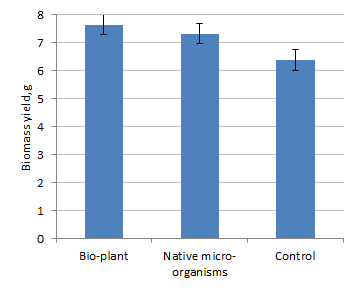
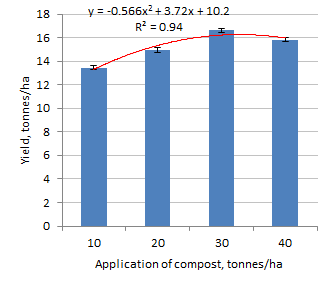
A biotest with Brassia juncea L .vegetable as a test plant was used to evaluate chicken manure composted with native microorganism (NM), a commercial inoculum (Bio-plant) and fresh water (control). Plant height, number of leaves and harvested yield were not different between “NM” and “Bio-plant” compost and tended to be higher (P=0.085) than for the control (Figure 1). However, the mixture of native microorganisms (NM) was easy to make, was stable and low cost in comparison with the commercial Bio-plant product. The populations of micro-organisms were much higher in compost inoculated with both " NM" and " Bio-plant" compared with the control. The yield of Brassica juncea increased curvilinearly with level of application of the "NM" compost with the peak occurring at 30 tonnes/ha of compost (Figure 2).
![]() |
![]() |
| Figure 1. Effect on biomass yield of Brassica spp of fertilizing with compost made with natural micro-organisms, a commercial inoculum (Bio-plant) or non-inoculated compost (Control) | Figure 2. Effect on biomass yield of Brassica spp of fertilizing with compost made with natural micro-organisms, |