Water-extractable dry matter and neutral
detergent fibre as indicators of whole tract digestibility in goats fed diets of
different nutritive value
Pheng Buntha
Center for Livestock and Agriculture
Development
(CelAgrid, UTA-Cambodia)
Phnom Penh, Cambodia
tha_vt@yahoo.com
Abstract
Fresh foliages of guinea grass (Panicum maximum), cassava (Manihot esculenta), stylo (Stylosanthesis guiensis, CIAT 183) and water spinach (Ipomoea aquatica) were fed to growing goats in a Completely Randomized Block arrangement with 3 goats and 4 periods, each of 8 days. The aim was to compare the water-extractable DM of these feeds with NDF values as predictors of whole tract DM digestibility.
The proportion of leaf in the foliages offered was highest in cassava with relatively lower values for stylo and water spinach which were similar to each other (only leaves were fed in the case of guinea grass) . Some degree of selection occurred during eating as there were indications that on the cassava the goats selected the same proportion of leaf as in the foliage offered, but ate more of the petioles than the stems. For stylo, leaves were preferred slightly more than stems while the opposite was the case with the water spinach. There was a close relationship between water-extractable DM and NDF in DM (R2 = 0.77; n = 35) in the different botanical components of the four foliages. DM intakes were highest on guinea grass and lowest on cassava with intermediate values for stylo and water spinach. Highest DM digestibility was recorded on the water spinach diet with lowest values for cassava. N digestibility was also high for water spinach with the lowest value for guinea grass. Among the guinea grass, stylo and water spinach foliages, there was a close relationships between DM digestibility and the two chosen indicators:- NDF and water extractable DM , with the closest fit being observed for the latter (R2 = 0.85 and 0.98, respectively; n=3). The data for cassava did not fit in either of these relationships.
It is concluded that the water-extractable
DM technique is a simple, low cost, and effective
method that is equal to, or superior than, NDF as a predictor of the
the DM digestibility of most forages. Forages for which the method is
inappropriate (eg: cassava) are likely to be those which contain
anti-nutritional substances known to affect negatively feed intake and
digestibility. Urine excretion was 6 times higher, relative to live weight,
and 2 times higher, relative to water consumed from the forages, in goats fed
water spinach compared with the other foliages.
Key words: Cassava, foliages, goats,
guinea grass, NDF, nutritive value, stylo,
water extraction, water spinach
Introduction
The use of foliage from trees and shrubs in animal nutrition has focused the attention of many researchers, due to the fact that these feed resources are locally available, perennial sources of feeds (Leng 1997), rich in protein and particularly appropriate for small ruminants (Seng Sokerya and Rodriguez 1). Nowadays many researchers are interested in simple methods for measuring the digestibility of diets such as in sacco, and in vitro, and also the use of indicators of digestibility such as crude fibre and NDF. Another approach to the use of simple predictors of digestibility was developed by Ly and Preston (1997). They measured the DM extracted by water during a 90 minute cycle in a washing machine and suggested that this parameter could be used as an indicator of the potential degradability of the feed in the rumen ecosystem. The washing loss was closely related with in sacco degradability at 48 hr and with the in vitro gas production at 48 hr. It was recommended that the use of the washing loss method could be a first approximation to estimation of nutritive value as it is simple, rapid, and low cost, and dispenses with the need for surgically modified animals (Ngugen Van Lai and Nguyen Thi Thu Huong 1999).
In an experiment with buffaloes to test the effect of supplementation of rice straw with Sesbania leaves, it was shown that the dry matter wash value (water-extractable DM), as determined by the method of Ly and Preston (1997), was more closely related to in vivo digestibility than were measurements of in vitro and in sacco digestibility (Nguyen Van Thu 2005).
The aim of the present investigation was to compare
the water-extractable dry matter with the NDF value as predictors of in vivo digestibility of Guinea grass, fresh cassava
foliage, stylosanthes, and water spinach, each fed to goats as the sole feed.
Materials and Methods
Location
The study was carried out at the Livestock Research Center, in
Laos, from September to October, 2005.
Treatments and design
Fresh foliage of guinea grass (Panicum maximum) (GG), cassava (Manihot esculenta) (CF), stylo (Stylosanthesis guiensis) (ST) and water spinach (Ipomoea aquatica) (WS) were compared in a Completely Randomized Block arrangement with 3 goats and 4 periods (Table 1), each of 8 days. The first 3 days were for adaptation to the diet followed by 5 days for data collection.
|
Table 1. Experimental layout for each source of foliage |
|||
|
Period |
Goat 1 |
Goat 2 |
Goat 3 |
|
1 |
CF |
ST |
GG |
|
2 |
WS |
CF |
ST |
|
3 |
GG |
WS |
CF |
|
4 |
ST |
GG |
WS |
Animals and housing
Two female goats and one male goat averaging 13 kg live
weight were used for the evaluation of each plant species. The
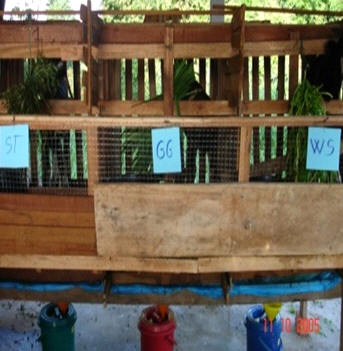
goats were housed in metabolism cages (1.0x0.8 m), elevated 0.7 m
and allowing the separate collection of faeces and urine. The cages
were make of wood and were situated in a building with roof and
open sides (Photo 1).
|
|
|
Photo 1: The metabolism cages made from local materials |
Feeding management
The guinea grass, fresh cassava foliage, stylosanthes foliage and water spinach were harvested daily from plots in the Livestock Research Centre. They were offered fresh as the sole feeds, immediately after harvesting. The foliages were offered as whole branches and were suspended from the roof of the cage above the feed trough. Fresh quantities of foliage were given three times per day (7:00 AM, 12:00 AM and 4:00 PM) in amounts some 20% above observed intakes.
Measurements
Feeds offered and refused, and output of faeces and
urine, were
recorded daily during the last 5 days of each period. Samples of
feed offered and refusals were separated daily into leaf, petiole and stem
(cassava), and leaf and stem (stylo and water spinach). In the case of the
guinea grass, only the leaves were offered. Samples of each component (offered
and refused) were retained for analysis of DM, N, water extractable DM and N and NDF. A sub-sample (10%) of faeces was put each day in plastic bags in the
freezer (-20 °C). Urine was collected in a bucket containing
10 ml of 25% sulphuric acid (H2SO4) to keep
the pH below 4 so as to prevent escape of ammonia. A sub-sample (10%) was
collected each day and kept in the freezer.
Chemical analysis
Samples of the foliages offered were dried by micro-wave radiation and ground in a coffee mill. For the water extraction method (Ly and Preston 1997; Ly and Preston 2001), duplicate samples (about 1 g) were put in tea bags in a semi-automatic washing machine and thereafter washed for three consecutive cycles of 30 min each. The temperature and pH of the tap water utilized were on average 25oC and 6.6, respectively. The volume of water used in every cycle was in the ratio of 3 litres per bag. After washing, the DM and N in the residue in the bags were measured.
Feed and faecal samples were dried by microwave radiation to
measure the DM content (Undersander et al 1993). Total N of samples of feed and faeces and urine, and of the residual material after washing, were determined by the Kjeldahl procedure as
outlined by AOAC (1990). The ash content of feed and faeces was
determined following the AOAC (1990) recommendations; organic matter was assumed to be the result of subtracting the
percentage of ash from 100. The NDF was determined according to the
method of Van Soest et al (1991).
Statistical analysis:
The data were analyzed using the general linear model (GLM) procedure in the
ANOVA
software of MINITAB (release 13.31). Sources of variation were treatments
(foliages), blocks (goats) and error. Relationships between independent variables
(wash value of DM and NDF) and the dependent
variable (DM digestibility) were determined using the
regression models in the Excel software.
Results and discussion
Feed selection and composition
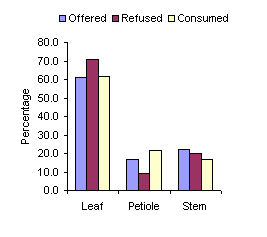
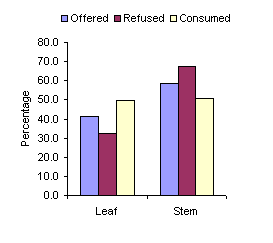
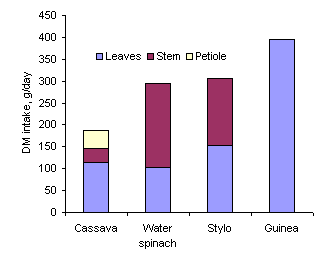
The proportion of leaf in the foliages offered was highest in cassava with similar, and relatively lower, values for stylo and water spinach (Table 2; Figures 1 to 3). Some degree of selection occurred during eating as there were indications that on the cassava the goats selected the same proportion of leaf as in the foliage offered, but ate more of the petioles than the stems. For stylo, leaves were preferred slightly more than stems while the opposite was the case with the water spinach. This pattern of eating contrasts markedly with the major degree of selection for leaves observed in sheep fed cereal crop residues (Aboud et al 19--), but is in agreement with the reports of Theng Kouch et al (2003), Toum Keopaseuht et al (2004) and Ammaly (2005) where goats preferred to have access to whole branches of foliage (of cassava, mulberry, gliricidia and stylo), which enabled them to eat some stems and petioles, as compared with having access restricted to leaves only.
|
Table 2: Proportions of the foliages (cassava, stylosanthes, and water spinach) in samples of feeds offered and in the refusals and actually consumed (DM basis) |
||||||||||||
|
|
Cassava |
Stylo |
Water Spinach |
|||||||||
|
|
Offer |
Refuse |
Consume |
Offer |
Refuse |
Consume |
Offer |
Refuse |
Consume |
|||
|
Leaf |
61.1 |
70.6 |
61.4 |
41.2 |
32.7 |
49.5 |
42.9 |
48.3 |
35.0 |
|||
|
Petiole |
16.5 |
9.2 |
21.8 |
|
|
|
|
|
|
|||
|
Stem |
22.4 |
20.2 |
16.8 |
58.8 |
67.3 |
50.5 |
57.1 |
51.7 |
65.0 |
|||
 |
|
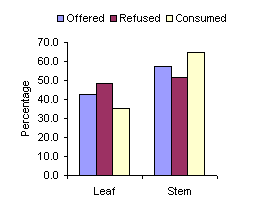 |
| Figure 1. Proportions of leaves, petioles and stems in cassava foliage offered, refused and consumed (DM basis) | Figure 2. Proportions of leaves and stems in stylo foliage offered, refused and consumed (DM basis) | Figure 3. Proportions of leaves and stems in water spinach foliage offered, refused and consumed (DM basis |
Crude protein was highest in the leaves of cassava and water spinach, while guinea grass leaves were lowest with intermediate values for stylo leaves (Table 3). Petioles and stems of cassava and stems of stylo and water had similar levels of crude protein in the range of 9.6 to 12.8% in DM.
|
Table 3. DM and crude protein in plant components consumed by goats fed cassava foliage (CF), Guinea grass (GG), Stylo (ST) and water spinach (WS) |
||||
|
|
CF |
GG |
ST |
WS |
|
DM content, % |
||||
|
Leaves |
25.1 |
25.7 |
27.1 |
11.3 |
|
Petiole |
15.6 |
|
|
|
|
Stem |
16.1 |
|
26.2 |
9.23 |
|
Crude protein in DM, % |
||||
|
Leaves |
30.8 |
11.4 |
22.1 |
26.2 |
|
Petiole |
9.63 |
|
|
|
|
Stem |
10.6 |
|
12.8 |
11.9 |
There were wide variations in NDF with guinea grass leaves having levels close to 80% while water spinach leaves and stems had only half that level (Table 4). Stems of cassava and stylo had higher NDF than leaves of the same species and the levels were considerably higher than was observed in stems of water spinach. Water extractable DM was high in all components of cassava and water spinach foliage. Lowest values were in leaves of guinea grass. Water extractable N values were high in all components of cassava foliage with stems of stylo and water spinach having higher levels than the leaves.
|
Table 4: Mean values for water-extractable DM and N, and for NDF in components of foliage of cassava, guinea grass, stylo and water spinach |
|||||
|
|
Cassava |
Guinea |
Stylo |
W S |
SEM |
|
Wash value (DM), % |
|||||
|
Leaves |
40.6 |
21.4 |
26.3 |
38.7 |
|
|
Petiole |
43.2 |
|
|
|
1.46 |
|
Stem |
44.1 |
|
29.6 |
48.4 |
|
|
Wash value (N), % |
|
|
|||
|
Leaves |
45.7 |
22.2 |
31.5 |
31.4 |
|
|
Petiole |
56.4 |
|
|
|
5.6 |
|
Stem |
64.4 |
|
47.1 |
39.7 |
|
|
NDF, % |
|
||||
|
Leaves |
40.1 |
79.1 |
55.5 |
42.8 |
|
|
Petiole |
45.1 |
|
|
|
1.39 |
|
Stem |
56.7 |
|
61.5 |
41.0 |
|
|
SEM is among species and plant parts within each analysis |
|||||
There was a close relationship between water-extractable DM and NDF in DM (Figure 4). This was to be expected since, as pointed out by Chermiti et al (1996), the water-extractable DM is mostly derived from the cell contents and in the NDF method is represented by the detergent soluble fraction (ie: 100-NDF).
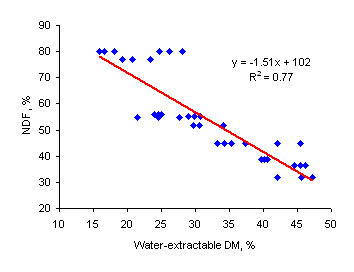
Figure 4. Relationship between water-extractable DM and
NDF (data derived from plant components
in offered and refused foliages of cassava, guinea, stylo and water
spinach)
Voluntary feed intake
DM intakes were highest on guinea grass and lowest on cassava with intermediate values for stylo and water spinach (Table 5; Figure 5). The intakes of cassava foliage as a function of live weight were much lower (17 g DM/kg LW) than those recorded by Theng Kouch et al (2003) for cassava foliage as the sole feed for goats (42 g DM/kg LW). The reason for the low intakes on cassava foliage is not immediately apparent except that the origins of the cassava plants were quite different., and there could have been differences in the concentrations of non-nutritional factors such as cyanogenic glucosides and tannins, which may have affected intake. Total intakes of N were similar for stylo, cassava and water spinach but the contribution from the different plant parts were quite different with the leaves supplying almost all the N in cassava while it was divided equally between leaves and stems for stylo and water spinach (Figure 6).
|
Table 5. Intake of DM, water (present in the foliage) and excretion of urine, in goats fed cassava foliage (CF), Guinea grass (GG), Stylo (ST) or water spinach (WS) |
||||||
|
|
CF |
GG |
ST |
WS |
SEM |
Prob |
|
Intake, g DM/day |
|
|
|
|||
|
Leaves |
115 |
395 |
152 |
103 |
- |
- |
|
Petiole |
40.9 |
- |
155 |
191 |
- |
- |
|
Stem |
31.5 |
- |
- |
- |
- |
- |
|
Total |
200a |
395c |
308b |
294b |
25.8 |
0.001 |
| Volume, ml/day | ||||||
| Water in feed | 899c | 1441b | 1199b | 2806a | 143 | 0.001 |
| Urine excretion | 301a | 365a | 358a | 1901b | 81 | 0.001 |
| Urine/water in feed | 0.38a | 0.28a | 0.28a | 0.72b | 0.064 | 0.001 |
|
DM, g/kg LW |
17.2a |
31.7b |
23.6a |
21.9a |
1.88 |
0.000 |
|
ab Means without letter in common in the same row differ at P<0.05 |
||||||
 |
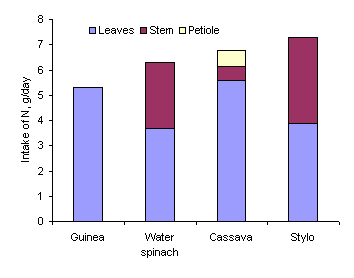 |
| Figure 5. DM intake of the components of the foliages by the goats | Figure 6. N intake of the components of the foliages by the goats |
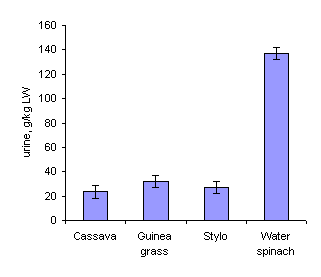
An interesting observation concerned the excretion of urine which was some 6 times higher for the water spinach diet compared with the other foliages (Table 5; Figure 7). In contrast, water consumed as part of the foliage was only between 2 and 3 times higher on water spinach compared with the other treatments. Thus the ratio of urine excreted to water consumed in the foliage was twice as high for the water spinach diet compared with the rest (Figure 8). There is no obvious explanation for these differences, although presumably it reflects differences at the level of nutrient metabolism.
 |
 |
| Figure 7. Urine excretion as proportion of live weight | Figure 8. Relative volumes of water consumed in the foliages and urine excreted (ml/day) |
Digestibility and N retention
Highest DM digestibility was recorded on the water spinach diet with lowest values for cassava (Table 5). N digestibility was also high for water spinach with lowest values for guinea grass. The values for daily N retention reflected those for N intakes.
|
Table 5 : Mean values of nutrient digestibility and N balance for goats fed cassava foliage (CF), Guinea grass (GG), Stylo (ST) or water spinach (WS) |
||||||
|
|
CF |
GG |
ST |
WS |
SEM |
Prob |
|
Apparent digestibility, % |
|
|
||||
|
Dry matter |
67.1a |
73.1ab |
74.6b |
81.7b |
2.61 |
0.002 |
|
Organic matter |
64.5a |
58.2a |
66.8ab |
79.6b |
4.23 |
0.005 |
|
Nitrogen |
79.1b |
69.0a |
77.3b |
87.6c |
3.12 |
0.002 |
|
N balance, g/day |
|
|
||||
|
Intake |
6.42ab |
4.61a |
7.95b |
8.84b |
0.90 |
0.013 |
|
Retention |
2.23 |
1.73 |
2.34 |
2.74 |
0.80 |
0.87 |
|
abc Means without letter in common in the same row differ significantly (P<0.05) |
||||||
DF and water-extractable DM
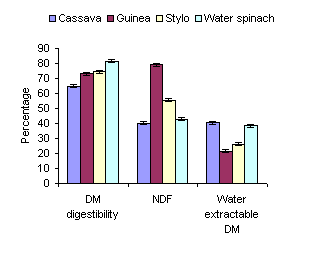
It is apparent from the
comparison of the data for digestibility with those for NDF and water
extractable DM that the results for cassava were atypical, in that NDF and water
extractable DM values were comparable with those for water spinach yet there
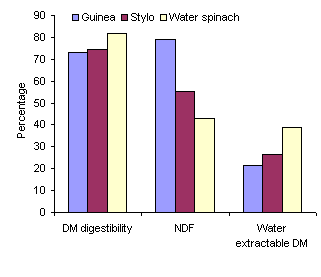
were 15 units of difference in DM digestibility. Leaving out the cassava data
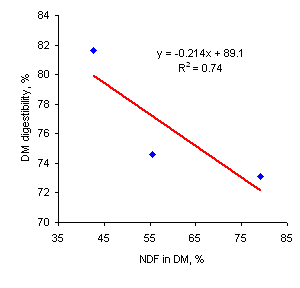
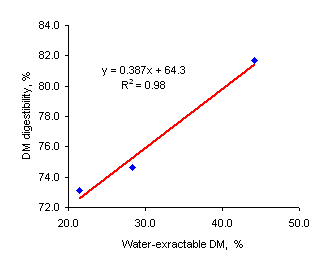
(Figure 8), there were close relationships between
digestibility and the two chosen indicators:- NDF and water extractable DM, with
the closest fit being observed for the latter (Figures 9 and 10)
 |
 |
|
|
Figure 9. Mean values for DM digestibility and
contents of |
Figure 10. Mean values for DM digestibility and contents of NDF and water extractable DM in the foliages that were consumed (omitting the data for cassava) |
|
 |
|
|
Figure 11. Relationship between NDF in foliage consumed and DM digestibility in goats fed three foliages (stylosanthes, guinea grass and water spinach) |
Figure 12. Relationship between water-extractable DM in foliage consumed and DM digestibility in goats fed three foliages (stylosanthes, guinea grass and water spinach) |
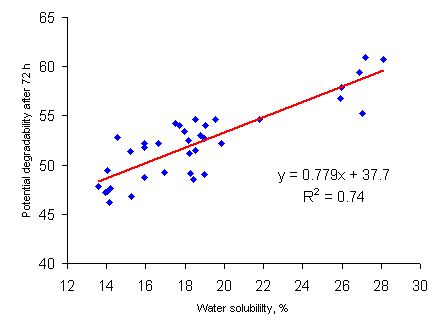
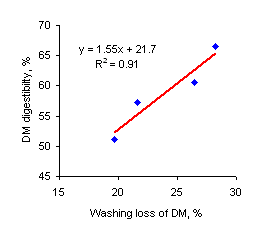
Support for the superiority of water extractable DM, compared with NDF, as an indicator of digestibility can be seen in data reported for tropical grasses in Cameroon (Figure 13). The coefficient of determination (R2) between potential DM digestibility (in sacco 72 hour degradability method) was 0.74 for water soluble DM compared with 0.31 for NDF (Enoh et al 2005). A close relationship between water-extractable DM and in vivo DM digestibility in buffaloes (Figure 14) was reported by Nguyen Van Thu (2005). Russell and Karsli (2002) observed that the water soluble "a" fraction determined by the in sacco method was comparable with NDF as predictors of whole tract digestibility in cattle (R2 of 0.83 and 0.85, respectively) and better than NDF for the prediction of voluntary feed intake (R2 of 0.80 and 0.69, respectively).
 |
 |
|
| Figure 13. Relationship between potential DM rumen degradability after 72 hours (in cattle) and water soluble DM in tropical grasses (Enoh et al 2005) | Figure 14. Relationship between DM digestibility and water-extractable DM of the diet in buffaloes fed rice straw or para grass with or without supplementation of Sesbania leaves(Nguyen Van Thu 2005) |
Conclusions
-
The water-extractable DM technique is a simple, low cost, and effective method that is equal to, or superior than, NDF as a predictor of the the DM digestibility of most forages.
-
Forages for which the method is inappropriate (eg: cassava) are likely to be those which contain anti-nutritional substances known to affect feed intake and digestibility.
-
Urine excretion was 6 times higher, relative to live weight, and 2 times higher, relative to water consumed from the forages, in goats fed water spinach compared with the other foliages.
Acknowledgment
The author wishes to thank the MEKARN programme for providing the opportunity to conduct this mini-project in order to improve and develop his knowledge and analytical skills. Dr Preston and MSc Chhay Ty are acknowledged for their timely advice and assistance in interpreting the data.
References
Ammaly Phengvilaysouk 2005 Effect on intake and digestibility by goats given jackfruit (Artocarpus heterophyllus) leaves alone, the whole branch or free access to both. MEKARN Mini-projects, 2005-07 Article # 01. Retrieved , from http://www.mekarn.org/MSC2005-07/minpro/amma01.htm
AOAC 1990 Official Methods of Analysis.
Association of Official Analytical Chemists. 15th edition (K Helrick, editor).
Arlington pp 1230
Chermiti A, Nefsaoui A, Teller E, Vanbelle M, Ferchichi H and Rakbani N 1996:Prediction of the voluntary intake of low quality roughages by sheep from chemical composition and ruminal degradation characteristics. Animal Science, 62:57-62
Enoh M B, Kijora C, Peters K J and Yonkeu S 2005: Effect of stage of harvest on DM yield, nutrient content, in vitro and in situ parameters and their relationship of native and Brachiaria grasses in the Adamawa Plateau of Cameroon. Livestock Research for Rural Development. Vol. 17, Art. #4. Retrieved December 8, 105, from http://www.cipav.org.co/lrrd/lrrd17/1/enoh17004.htm
Leng R A 1997 Tree foliage in ruminant nutrition.
FAO
Animal Production and Health. Paper No 139. Rome pp
100
Ly J and Preston T R 1997 An approach to the estimation
of washing losses in leaves of tropical trees. Livestock
Research for Rural Development 9(3): http://www.cipav.org.co/lrrd/lrrd13/1/ly131.htm
Ly J and Preston T R 2001 In vitro estimates of nitrogen
digestibility for pigs and water-soluble nitrogen are correlated in
tropical forage feeds. Livestock
Research for Rural Development (13)1. http://www.cipav.org.co/lrrd/lrrd13/1/ly131.htm
Nguyen Van Lai and Nguyen Thi Thu Huong 1999 Comparison
of the in sacco rumen and washing loss methods to estimate the
potential energetic value for livestock of leaves from tropical
trees, shrubs and crop residues
http://journals.tubitak.gov.tr/veterinary/issues/vet-02-26-2/vet-26-2-9-0010-16.pdf
Seng Sokerya and Rodriguez Lylian 2001 Foliage from
cassava, Flemingia macrophylla and bananas compared
with grasses as forage sources for goats: effects on growth rate
and intestinal nematodes. Livestock Research for Rural Development
(13) 2: Retrieved December 8, 2005 from
http://www.cipav.org.co/lrrd/lrrd13/2/soke132.htm
Theng Kouch, Preston T R and Ly J 2003 Studies on utilization of trees and shrubs as the sole feedstuff by growing goats; foliage preferences and nutrient utilization. Livestock Research for Rural Development 15 (7). Retrieved December 7, 2005, from http://www.cipav.org.co/lrrd/lrrd15/7/kouc157.htm
UndersanderD, Mertens D R and Thiex N 1993 Forage
analysis procedures. National Forage Testing Association. Omaha, pp
154