Study on the effect of harvesting frequency on
cassava foliage for cassava hay production and its nutritive
value
A Phengvilaysouk, and M
Wanapat*
LivestockResearch
Center, National Agriculture and Forestry Research
Institute,
Ministry of Agriculture and Forestry, P O Box
811,Vientiane, Lao PDR
ammalyp@yahoo.com
* Tropical Feed Resources Research and Development
Center (TROFREC),
Department of Animal Science, Faculty of Agriculture,
Khon Kaen University, Khon Kaen 40002, Thailand.
Abstract
This experiment was carried out to investigate the effect of
harvesting frequency on yield and nutritive value of cassava
foliage. It was arranged in a Randomized complete block design
(RCBD). Two treatments were two different ages of cassava foliage
of initial harvesting, at 2 and 4 months; (IC2) and
(IC4). The subsequent harvestings for both were at every
2 months until the cassava foliage was 8 months old. Cassava
(Rayong 5, RY5) was cultivated as a monoculture for all
plots; each plot was 5x10 m (50 m2), and 150 kg/ha of
commercial fertilizer (46-0-0, N-P-K) was applied to cassava crop
at the start.
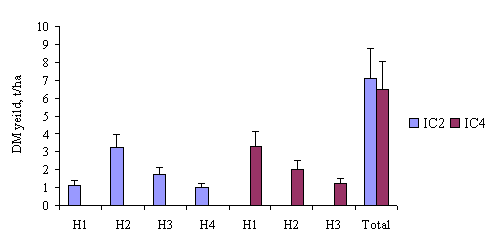
The results showed that cassava foliage yield was
significantly different (P<0.05) among harvesting times within
the treatments. For the initial harvesting at 2 months of age
(IC2), DM yield was highest in the second harvest
(H2) and was lowest in the fourth harvest
(H4) (3.2 and 1.2 tonnes/ha, respectively). For the
treatment of initial harvesting at 4 months of age
(IC4), DM yield was greatest in the first harvest
(H1) (3.3 tonnes/ha) and was lowest in the third harvest
(H3) (1.2 tonnes/ha). The foliage yield at each
harvesting time significantly decreased (p<0.05) with the crop
age. However, total DM yield was not significantly different among
treatments. Total DM yields of IC2 and IC4
were 7.1 and 6.5 tonnes/ha, respectively. The fiber contents, NDF,
ADF and ADL, were significantly (p<0.05) higher in
IC4 than IC2, especially in the first harvest
(H1) (56.4, 37.5 and 14.6%, respectively). In contrast,
CP was significantly higher in IC2 (21.5%). Based on
this study, it is concluded that different initial harvesting of
cassava foliage at 2 months (IC2) and 4 months of age
(IC4) had no major affect on the quantity of the
foliage, with yields of 7.1 vs 6.5 tonnes/ha, respectively, but
affected the chemical composition of cassava, especially of CP
(21.5% vs 20.5%) and NDF (48.1% vs 52.4%), respectively.
Keywords: Cassava foliage; initial harvesting; cassava
hay production; chemical composition
Introduction
Cassava or tapioca (Manihot esculenta, Crantz) is
an annual tuber crop grown widely in tropical and sub-tropical
countries. This plant is well known for adaptation to poor soil
conditions, to be drought resistant and to be pest tolerant
(Chantaprasam and Wanapat, 2003). Several varieties of cassava are
found in Lao PDR, including ordinary cassava, red cassava, yolk
cassava, Japanese cassava, mottled cassava and the animal feed
cassava (Biodiversity Country Report, 2003). Generally, cassava is
a crop traditionally grown for root production. Cassava root is
regarded as a reserve food for people because it is an excellent
energy source, and leaves are available as crop residues when the
root is harvested (Vongsamphanh, 2003). Cassava foliage is one of
the most important crops for farmers, because it contains a high
content of proteins. According to Allen (1984) cassava leaf has a
high crude protein (CP) concentration (16.7 to 39.8% CP) which
consisted of various essential amino acids in proportions close to
those of soybean meal(Atchara Limsila et al., 2002).
However, the intake and digestibility could be low due to the high
level of condensed tannins (Reed et al., 1982; Onwuka,
1992).
Recently, several researchers have paid attention to cassava in
integrated crop-livestock farming systems in several Asian
countries. Preston (2002) reported that new research information
about the use of cassava foliage as animal feed is becoming
available. The potential use of cassava hay (combined leaves, stems
and petiole) was reported by Wanapat et al. (1997) and then
by Wanapat (2000a; 2000b), who also reported that planting cassava
for hay making aimed to increase digestible biomass. In addition,
cassava tubers contain high levels of starch while the leaves have
been used as a high protein source when collected at tuber
harvesting time (Wanapat, 2001). Alternatively, systems for making
hay from cassava foliage by harvesting the whole upper green part
at early growth stage (3-4 months), and every 2-3 months
subsequently until one year by cutting the whole crop at 30 cm
above ground could reduce the condensed tannin content and increase
the protein content (25% of DM), resulting in a higher nutritive
value (Wanapat, 2003). Cassava can also be managed as a
semi-perennial crop with repeated harvesting of foliage at 2-3
month intervals (Preston and Rodríguez, 2004). It is very
important that new high-yielding cassava varieties and highly
effective cultivation technologies are developed (Wenquan Wang,
2002).
The purpose of this study was to determine the effect of initial
harvesting of cassava foliage at 2 and 4 months, and subsequent
harvestings at 2 months until 8 months of age, on cassava hay yield
and chemical composition under the rain-fed conditions of Lao
PDR.
Materials and Methods
Location
The experiment was conducted at the Livestock Research Center
(Nam Xuang), 44 km from Vientiane City, Lao PDR, under rain fed
conditions on a sandy loam soil. The pH of the soil was 4-5. There
are two seasons, dry (November-April) and rainy (May-October). The
average temperature was approximately 27oC. The
experiment was started in March 2006 and finished in January,
2007.
Experimental design
The experiment was arranged in a Randomized complete block
design (RCBD) with 2 treatments and 6 replications. Cassava was
cultivated in monoculture for all of the plots and each plot was
5x10 m (50 m2). The experiment consisted of the
following two treatments:
-
IC2 = Initial harvesting of cassava foliages at 2
months and subsequent harvesting every 2 months until 8 months of
age.
-
IC4 = Initial harvesting of cassava foliages at 4
months and subsequent harvesting every 2 months until 8 months of
age.
Soil preparation and cultivation of cassava
Soil was ploughed by using a tractor to break down the soil
structure without harrowing. The area was divided into 12 plots.
The size of each plot was 5x10 m. Rayong 5 [RY5] was
cultivated in monoculture at the beginning of the rainy season
(March). Cassava stems were used at length of 15-20 cm for planting
with 90x60 cm spacing in each plot. Weeding was done monthly and
commercial fertilizer (46-0-0 of N-P-K) was applied initially and
after at every harvest (150 kg/ha).
Harvesting of cassava and chemical analysis
Initial harvesting of cassava foliage was done at 2 months
(IC2) and at 4 months (IC4) of growth. The
subsequent harvest was done at every 2 months of growth until the
foliage was 8 months old. Cassava foliage IC2 was
harvested 4 times and IC4 was harvested 3 times.
Harvesting of IC2 treatment was at 2 months when the plants were
90-120 cm in height. They were harvested at 40-50 cm above the
ground, and treatment of IC4 was harvested when the foliage was
150-180 cm in height, cutting at 90-100 cm, only green part of
foliage. The cassava foliage comprised young stems, leaves and
petioles. They were harvested between 08:00h - 10:00h to avoid
yield fluctuation. The foliage was measured for fresh yield in
individual plots.
The samples 1 kg were randomly sampled of each plot and divided
into two parts, one for separate proportions of leaves, petioles
and stems, and the other for analysis of dry matter (DM), ash and
crude protein (CP), according to (AOAC, 1990). Neutral-detergent
fiber (NDF), acid-detergent fiber (ADF) and acid-detergent lignin
(ADL) were determined by the procedure of Goering and Van Soest
(1970). Condensed tannins (CT) in cassava hay were analyzed by the
Vanillin-HCL method (Burns, 1971 modified by Wanapat and
Poungchompu (2001).
Statistical analysis
Data were subjected to Analysis of Variance (ANOVA) according to
RCBD using the General Linear Model (GLM) of Minitab Software
Version Release 14 (2003). Treatment means that showed significant
differences at the probability level of (P<0.05) were compared
by using Tukey's pairwise comparison procedures. The following
model was: Yij = µ +Bi + Tj +
Eij
Where = Yij = Observation in block i (I=1-6) and
treatment j (j=1-2), µ = Overall mean, Bi = Block
effect, Tj = Treatment effect, Eij = Error.
Results
Yield and chemical composition of cassava
foliage
Leaf accounted for a higher proportion than petiole and stem of
the whole crop. Within initial harvesting of cassava foliage at 2
months (IC2), the highest DM yield was 3.2 tonnes/ha,
obtained at second harvesting (H2) while within initial
harvesting of cassava foliage at 4 months (IC4) it was
3.3 tonnes/ha, obtained at first harvesting (H1).
Highest total yield was found at IC2 compared with
IC4 (7.1 vs 6.5 tonnes/ha) (Table 1).
|
Table 1. Effect of harvesting time on cassava foliage
yield
|
|
|
IC2
|
Total
|
IC4
|
Total
|
SEM
|
|
|
H1
|
H2
|
H3
|
H4
|
H1
|
H2
|
H3
|
|
-------------------------DM yield,
t/ha------------------------
|
|
Leaf
|
0.6de
|
1.9a
|
0.8c
|
0.5e
|
3.8
|
1.4b
|
1.2b
|
0.7cd
|
3.2
|
0.15
|
|
Petiole
|
0.2c
|
0.5a
|
0.3b
|
0.2c
|
1.2
|
0.5a
|
0.3b
|
0.1c
|
0.9
|
0.06
|
|
Stem
|
0.3e
|
0.9b
|
0.6c
|
0.4de
|
2.2
|
1.5a
|
0.5cd
|
0.3e
|
2.3
|
0.15
|
|
Total
|
1.1c
|
3.2a
|
1.7b
|
1.0c
|
7.1
|
3.3a
|
2.0b
|
1.2c
|
6.5
|
0.35
|
|
a,b,c Means in the same row with different
superscripts differ (P<0.05).
IC2 = Initial harvesting of cassava foliage 2 months
and subsequent harvesting 2 months until 8 months.
IC4 = Initial harvesting of cassava foliage 4 months
and subsequent harvesting 2 months until 8 months.
H1 = Cassava foliage (CF), first harvest,
H2 = CF, second harvest, H3 = CF, third
harvest, H4 = CF fourth harvest.
|
Economical returns
Economical returns of cassava foliage are shown in Table 3. The
total expenditures for IC2 and IC4 are
significantly different. Treatment IC2 resulted in
higher expenditure compared to IC4 (1,693 and 1,451
USD), respectively. The costs of cassava hay for IC2 and
IC4 were not significantly different, 0.2 USD/kg of DM.
However, cassava foliage at IC2 had a higher quality,
because of higher levels of protein and lower levels of
fiber.
|
Table 3. Effect of harvesting time on cassava foliage
yield and economical returns
|
|
|
IC2 (4 cuttings)
|
IC4 (3 cuttings)
|
SEM
|
|
Cassava foliage DM yield
|
|
|
|
|
kg/ha
|
7083
|
6483
|
301
|
|
Expenditure (USD/ha)
|
|
|
|
|
Soil preparation
|
246
|
245
|
1.03
|
|
Planting
|
285
|
285
|
0.96
|
|
Weeding
|
486a
|
366b
|
0.98
|
|
Fertilizer
|
486a
|
364b
|
1.05
|
|
Harvesting
|
126
|
125
|
0.74
|
|
Drying
|
64.5
|
65.7
|
1.08
|
|
Total expenditure (USD/ha)
|
1693a
|
1451b
|
2.93
|
|
Cassava hay cost (USD/kg)
|
0.2
|
0.2
|
0.01
|
|
a,b,c Values on the same row with
different superscripts differ (P<0.05).
USD = United states of dollar; SEM = Standard error of the
mean.
IC2 = Initial harvesting of cassava foliage 2 months,
and subsequent harvesting every 2 months until 8
months.
IC4 = Initial harvesting of cassava foliage 4 months,
and subsequent harvesting every 2 months until 8
months.
|
Discussion
Cassava foliage yield
In the current study, initial harvesting of cassava foliage at 2
months (IC2) and at 4 months (IC4) showed
that total dry matter yield ranged from 7.1 to 6.5 tonnes/ha,
respectively, but was not significantly different between
IC2 and (IC4. These results agreed with
Wanapat (2001), who found that the DM yield of cassava hay ranged
from 2-8 tonnes/ha, depending on variety, cultivation practice and
use of fertilizer. This is in contrast with results from the study
of Chantaprasarn and Wanapat (2003), who demonstrated that DM yield
of cassava foliage ranged from 0.3 to 4.0 tonnes/ha when harvested
at 3 months after planting under traditional cultivation. DM yield
of both treatments was slightly higher than the value obtained by
Khang and Preston (2005a) who reported a cassava foliage
KM94 dry matter yield of 4.3 tonnes/ha. A similar result
was also obtained by Duong and Preston (2005), who found that dry
matter yield of cassava foliage was increased from 4.3 to 5.4
tonnes/ha when the cassava was fertilized with effluent at 5
tonnes DM/ha. Poungchompu et al. (2001) also reported that
DM yields were relatively high (3.6 to 4.4 tonnes/ha) for 3
cuttings, with a first harvest at 3 months after planting and every
2 months thereafter, and with planting on ridges and manure
application.
The results in the present study were basically lower
than the finding of Wanapat et al. (2005), who reported that
cassava production without legume intercropping and with cowpea,
Stylosanthesguianensis and Phaseoluscalcaratus
intercropping produced 12.6, 10.9, 11.4 and 11 tonnes DM/ha of
cassava foliage, respectively. DM yield of cassava foliage was
significantly reduced by subsequent harvesting and with the age of
the cassava plants. This finding is in agreement with Vongsamphanh
and Wanapat (2004), who showed that yield of RY72 and a
local variety was linearly decreased with harvest time after
planting, and Chantaprasarn and Wanapat (2003), who showed that
cassava foliage yield was increased by frequent harvesting
intervals. A similar result was also obtained by Sinthuprama et
al. (1983). Plant spacing and frequency of cutting have been
shown to have a significant effect on the combined yield of cassava
(Petlum et al., 2001). However, cassava foliage yield when
harvested at 2-month intervals could be maintained over a 2 year
period when goat manure or bio-digester effluent was applied at the
rate of 180 kg N/ha after every harvest (Preston, 2001). There are
several possible explanations for this result on the different
yields of cassava foliage, such as it differences in study site,
seasonal conditions, planting space, fertilizer management,
subsequent harvestings, and differences in variety (Gomez and
Valdivieso, 1984; Simwambana et al., 1992). Fertilizer
management can affect foliage yield, as reported by Molina and
El-Sharkawy (1995), as can the factor of age at first cutting and
interval between cuttings (Lockard et al., 1985; Simwambana
et al., 1992; Tung et al., 2001; Hong et al.,
2003).
The present results show that leaf proportion ranged from
46.4 to 48.5% when harvested at IC2 and IC4,
respectively. However, these values were lower than the results of
Meyrelles et al. (1977), who found the leaf proportion of
cassava foliage was 52%. In addition, leaf proportion was higher
when the crop was fertilized with effluent from a bio-digester, and
ranged from 60 to 66% (Khang and Preston, 2005a). This finding
agrees with Nguyen Phuc Tien et al. (2003,) who showed that
leaf proportion of cassava foliage associated with Flemingia ranged
from 60 to 63%. It has been found that cassava hay harvested at 4
months after planting had a leaf proportion of 61.6% (Wanapat,
2002).
The present results concerning the chemical composition of
cassava hay are in agreement with those from Khang and Preston
(2005a; 2005b), who reported that CP content in cassava foliage
ranged from 18.7 to 20.5% when intercropped with Flemingia, and
from 18.6 to 20.7% with application of effluent from a
bio-digester. In present study, CP content in cassava foliage
ranged from 19.7 to 22.2%. Wanapat et al. (1997) reported
that the CP value in cassava hay (whole crop) was 24.9%, compared
with 20.6-22.0% CP in the study of Poungchompu et al.
(2001). These results were lower than the values obtained by
Kiyothong and Wanapat (2003), who found that CP content ranged from
21.6 to 21.9% in cassava hay as sole crop. Vongsamphanhand Wanapat
(2004) also found that CP ranged from 22.6 to 25.8% when harvested
at 3 month intervals, and Wanapat et al. (2005) reported
cassava foliage intercropped with legumes had a protein content
that ranged from 20.2 to 24.1% CP in the first and second year,
respectively.
Concentrations of the fibrous components of cassava hay, NDF,
ADF and ADL were 48.1, 30.5, 10.7 and 52.4, 33.4, 12.3% when
harvested at IC2 and IC4, respectively. The
values of NDF, ADF and ADL in this study were higher than those
reported by Chantaprasarn and Wanapat (2003), and than those
obtained by Man and Wiktorsson (2001; 2002). NDF content ranged
from 35.3 to 37.6% when foliage was grown with and without effluent
applied (Khang and Preston, 2005a). It can be suggested that when
cassava was grown as monoculture, the fibrous fraction was slightly
higher compared to cassava intercropped with legumes, and that the
differences were probably due to differences in harvesting time.
Condensed tannins (CT) in cassava hay harvested at
IC2 and IC4 were from 3.6 to 3.5%,
respectively, and tended to decrease with subsequent harvestings.
These results are in agreement with those (3.4%) of Vongsamphanh
and Wanapat (2004), and are slightly lower than the values obtained
by Poungchompu et al. (2001) and Kiyothong and Wanapat
(2003). The level of condensed tannins in the present study tended
to decline with frequent harvesting, and was similar to the values
obtained by Hong et al. (2003). Wanapat (2002) also reported
that CT was generally higher in mature cassava leaves than in
cassava hay harvested at a young growth stage. However, a level of
CT of between 2-4% is considered to be favorable for ruminants as
rumen by-pass protein (Wanapat, 2001). If the level of CT in the
feed exceeds 6% of dry matter, it will reduce feed intake and
digestibility (Barry and Manley, 1984; Reed, 1995).
Conclusions and recommendations
-
Based on this experiment, it can be concluded that different
initial harvesting intervals of cassava foliage affected chemical
composition, but not the quantity of cassava hay.
-
Early initial
harvesting of cassava foliage showed that the crude protein content
tended to be higher and fibrous fractions lower in IC2.
-
Further research should be carried out on factors affecting the
yield of cassava foliage and feeding method in different farming
systems.
-
It would be interesting to assess the effects of
intercropping with legumes, and to consider integrated
crop-livestock systems in terms of animal manure application to
improve cassava foliage yield on-farm.
Acknowledgements
The author would like to express most sincere thanks to the
Swedish International Development Agency (Sida), Department for
Research Cooperation with Developing Countries (SAREC), through the
MEKARN regional project for funding this thesis research, and to
the National Agriculture and Forestry Research Institute (NAFRI),
Livestock Research Center (LRC) and Tropical Feed Resources
Research and Development Center (TROFEC), Department of Animal
Science, Faculty of agriculture, Khon Kaen University, Thailand for
permission to use research facilities and for their cooperation.
References
Allen R D 1984 Feedstuffs ingredient analysis table,
Feedstuffs (USA), p.25-30
AOAC 1990 Official methods of analysis. Association of
official analysis (15th ed). Washigton, D.C,
U.S.A
AtcharaLimsila, Saowaree Tungsakul, Wattana
Wattananont, Attapon Boonsing, Somyot Pichitporn and Howeler R H
2002 CASSAVA LEAF PRODUCTION RESEARCH IN THAILAND. Cassava
Research and Development in Asia: Exploring New Opportunities for
an Ancient Crop. Proceeding of the Seventh Regional Workshop held
in Bangkok, Thailand.
Barry T N and Manley TR 1984 The role of condensed
tannins in the nutritional value of Lotus peduculatus for
sheep 2. Quantitative digestion of carbohydrate and protein. Br J.
Nutr. 51:493.
Biodiversity Country Report 2003 Ministry for Agriculture
and Forestry, Vientiane, Lao PDR. Science Technology and
Environment Agency, Vientiane, Lao PDR
ChantaprasarnB and Wanapat M 2003 Effects of
different harvest intervals on cassava foliage (cassava hay) and
root yield. Tropical Feed Resources Research and Development Center
(TROFREC) Department of Animal Science, Faculty of Agriculture,
Khon Kaen University, Khon Kaen 40002, Thailand. http://www.mekarn.org.kh/msc2001-03/
Duong N K and Preston T R 2005 Effect of effluent from
low-cost plastic film biodigester on yield and chemical composition
of cassava foliage and tuber yield. http://www.mekarn.org/proctu/indexctu.htm
Goering H K and Van Soest P J 1970 Forage fiber
analysis. ARS. Handbook N. 379. United States Department of
Agriculture, Washington, DC, U.S.A.
Gomez G and Valdivieso M 1984Cassava for animal feeding:
effect of variety and plant age on production of leaves and roots.
Anim. Feed Sci. Technol. 11: 49-55.
Hong N T T, Wanapat M, Wachirapakorn C, Pakdee P and
Rowlinson P 2003 Effects of timing of initial cutting and
subsequent cutting on yields and chemical compositions of cassava
hay and its supplementation on lactating dairy cows. Asian-Aus. J.
Anim. Sci. 16: 1763 - 1769.
KhangD N and Preston T R 2005a Effect of effluent
from low-cost plastic film biodigester on yield and chemical
composition of cassava foliage and tuber yield. Workshop-seminar,
23-25 May, 2005, MEKARN-CTU. http://www.mekarn.org.kh/proctu/indexctu.
KhangD N and Preston T R 2005b Effect of
association with of Flemingia (Flemingia macrophylla)
on chemical composition of cassava foliage, total yield of foliage
and yield of cassava roots. Workshop-seminar, 23-25 May, 2005,
MEKARN-CTU. Http://www.mekarn.org/proctu/khan6acit.
KiyothongK and Wanapat M 2003 Supplementation of
cassava hay and stylo184 hay to replace concentrate for lactating
dairy cows. Cassava-legume intercropping: A potential feed
production system for small holder dairy farming. MSc thesis in the
programme "Tropical Livestock Systems". SLU, Dept of Animal
nutrition and management, Uppsala, Sweden.
LockardR G, Saqui M A and Wounuah D D 1985 Effects
of time and frequency of leaf harvest on growth and yield of
cassava (Manihot esculenta Crants) in Liberia. Field Crops Res. 12:
175-180.
Man N V and Wiktorsson H 2001Cassava tops ensiled with or
without molasses as additive effects on quality feed intake and
digestibility by heifers. Asian-Aus. J. Anim. Sci. 14:
624-630.
Man N V and Wiktorsson H 2002Effect of molasses on
nutritional quality of cassava and Gliricidia tops silage.
Asian-Aus. J. Anim. Sci. 15: 1294-1299.
MeyrellesL, MacLeod N A and Preston T R 1977
Cassava forage as a source of protein: effect of population density
and age of cutting. Trop. Anim. Prod. 2: 18-26.
Minitab Software Version Release 14 2003 MINITAB®
and the MINITAB logo® are registered trademarks of Minitab
Inc. Released 14 for Windows®, USA.
Molina J L and El-Sharkawy M A 1995Increasing crop
production in cassava by fertilizing production of planting
material. Field Crops Res. 44: 151-157.
Nguyen Phuc Tien, Ngo Tien Dung, Nguyen Thi Mui, Dinh Van
Binh and Preston T R 2003 Improving biomass yield and soil
fertility by associations of Flemingia (Flemingia macrophylla)
with Mulberry (Morus alba) and cassava (Manihot esculenta) on
sloping land in the Bavi area. Goat and Rabbit Research Centre
Sontay, Hatay, Vietnam. UTA-TOSOLY, Socorro, Santander del Sur,
Colombia. http://www.mekarn.org.kh/sarec03/contens.htm
OnwukaC F I 1992Tannin and saponin contents of
some tropical browse species feed to goats. Trop. Agric. (Trinidad)
69:176.
PetlumA Wanapat M and Wanapat S 2001Effect of
planting space and cutting frequency on cassava hay yield and
chemical composition. In: Proc. Interm. Workshop on "Currrent
Research and Development on Use of Cassava as Animal Feed", held in
Khon Kean, Thailand. July 23-24, 2001. pp.50-55.
Phanthavong Vongsamphanh and
Wanapat M 2004: Comparison of cassava hay yield and
chemical composition of local and introduced varieties and effects of levels of
cassava hay supplementation in native beef cattle fed on rice straw. Livestock
Research for Rural Development. Vol. 16, Art. No. 55.
http://www.cipav.org.co/lrrd/lrrd16/8/vong16055.htm
PoungchompuO, Wanapat S, Polthanee A, Wachirapakorn C
and Wanapat M 2001Effects of planting method and fertilization
on cassava hay yield and chemical composition. Department of Animal
Science, Faculty of Agriculture, Khon Kaen University, Khon Kaen
40002, Thailand Department of Agronomy, Faculty of Agriculture,
Khon Kaen University. http://www.forum.org.kh/~mekarn/proc-cass/poun.htm
Preston T R 2001 Potential of cassava in
integrated farming systems. In Proceeding of the international
workshop on current research and development on use as cassava as
animal feed. T. R. Preston, B. Ogle and M. Wanapat (Ed.). Khon Kaen
University, Thailand. http://www.mekarn.org.kh/procKK/pres.htm
Preston T R 2002
PRODUCTION AND UTILIZATION OF CASSAVA IN
INTEGRATED FARMING SYSTEMS FOR SMALLHOLDER FARMERS IN VIETNAM AND
CAMBODIA. Cassava Research and Development in Asia: Exploring New
Opportunities for an Ancient Crop. Proceeding of the Seventh
Regional Workshop held in Bangkok, Thailand.
Preston T R and Rodríguez L 2004 Production
and utilization of cassava foliage for livestock in integrated
farming systems. University of Tropical Agriculture Foundation,
TOSOLY, AA #48 Socorro, Santander, Colombia. Livestock Research for
Rural Development 16 (5). http://www.cipav.org.co/lrrd16/5/cont1605.htm
Reed J D, McDowell R E, Van Soest P J and Horvath P J
1982 Condensed tannin: a factor limiting to use of cassava
foliage. J. Sci. Food Agric. 33: 2131.
Simwambana M S C, Ferguson TU and Osiru D S O
1992 The effects of time to first shoot removal on leaf
vegetable quality in cassava (Manihot esculaenta Crants). J. Sci.
Food Agric. 60: 319-325.
SinthupramaS, Tiraporn C and Thongklum A 1983
Planting and management. Cassava monograph number 7. Department of
Agriculture, Ministry of Agriculture and Cooperatives. Bangkok,
Thailand. pp. 41-56.
Tung C M, Liang J B, Tan S L, Ong H K and Jelan ZA
2001 Foliage productivity and growth persistency of three local
cassava varieties. Asian-Aus J. Anim. Sci. 14:
1253-1259.
Vongsamphanh P 2003 Potential use of local feed
resources for ruminants in Lao, PDR. Livestock Research Center,
National Agriculture and Forestry Research Institute, Ministry of
Agriculture and Forestry, Vientiane, Lao PDR.
http://www.mekarn.org.kh/msc2001-03/theses03/contvong.htm
WanapatM 2000a Current livestock production and
protein sources as animal feed in Thailand. In Proc. FAO Expert
Consultation and Workshop: Protein Source for the Animal Feed
Industry, FAO Animal production and Health No 1., Rome.
Italy.
WanapatM 2000b Role of cassava hay as animal feed
in the tropics. In Proc. Agriculture Conference, Faculty of
Agriculture. Chiengmai Universty. Thailand. The National
Agriculture Fair, January 27-29.
WanapatM 2001 Role of cassava hay as animal feed
in the tropics. In Proceeding of the international workshop on
current research and development on use as cassava as animal feed.
T. R. Preston, B. Ogle and M. Wanapat (Ed.). Khon Kaen University,
Thailand. http://www.mekarn.org.kh/procKK/wana3.htm
WanapatM 2002 THE ROLE OF CASSAVA HAY AS ANIMAL
FEED. Cassava Research and Development in Asia: Exploring New
Opportunities for an Ancient Crop. Proceeding of the Seventh
Regional Workshop held in Bangkok, Thailand.
WanapatM 2003Manipulation of cassava cultivation
and utilization to improve protein to energy biomassforlivestock
feeding in the tropics.Asian-Australasian Journal of Animal
Science, 16, 463-472.
WanapatM, Petlum A, Joomjantha S and Wanapat S
2005 Legumes intercropping and long-term harvesting of cassava
foliage on biomass yield and chemical composition.
Workshop-seminar, 23-25 May, 2005, MEKARN-CTU. http://www/mekarn.org/proctu/mana4cit
WanapatM, Pimpa O, Petlum A and Boontao U 1997
Cassava hay: A new strategic feed for ruminants during the dry
season. Livestock Research for Rural Development, 9(2): http://www.cipav.org./lrrd/lrrd9/2/metha92.htm
WanapatM and Poungchompu O
2001Method for estimation of tannin by vallin-HCL method
(2001, a modified method of Burns, 1971).
Department of
Animal Science, Khon Kean University, Khon Kaen 4002,
Thailand.
Wenquan Wang 2002 CASSAVA PRODUCTION FOR INDUSTRIAL
UTILIZATION IN CHINA. PRESENT AND FUTURE PERSPECTIVE. Cassava
Research and Development in Asia: Exploring New Opportunities for
an Ancient Crop. Proceeding of the Seventh Regional Workshop held
in Bangkok, Thailand.